Clinical Trials
Clinical Trials
Our clinical research team is dedicated to supporting patients throughout every stage of a clinical trial. From the initial screening visit through study completion, our coordinators work closely with participants and study physicians to ensure they understand each step of the research process.

PIANO: A national pregnancy registry of women with IBD
This national prospective registry study is conducted to determine whether the rates of birth defects, miscarriages, premature births and other outcomes in women with inflammatory bowel disease (IBD) taking azathioprine/6MP or biologic therapy (Remicade, Humira, Cimzia, Tysabri, Stelara, Simponi, Entyvio, or Xeljanz) are different from those among IBD-affected women not taking these medications.
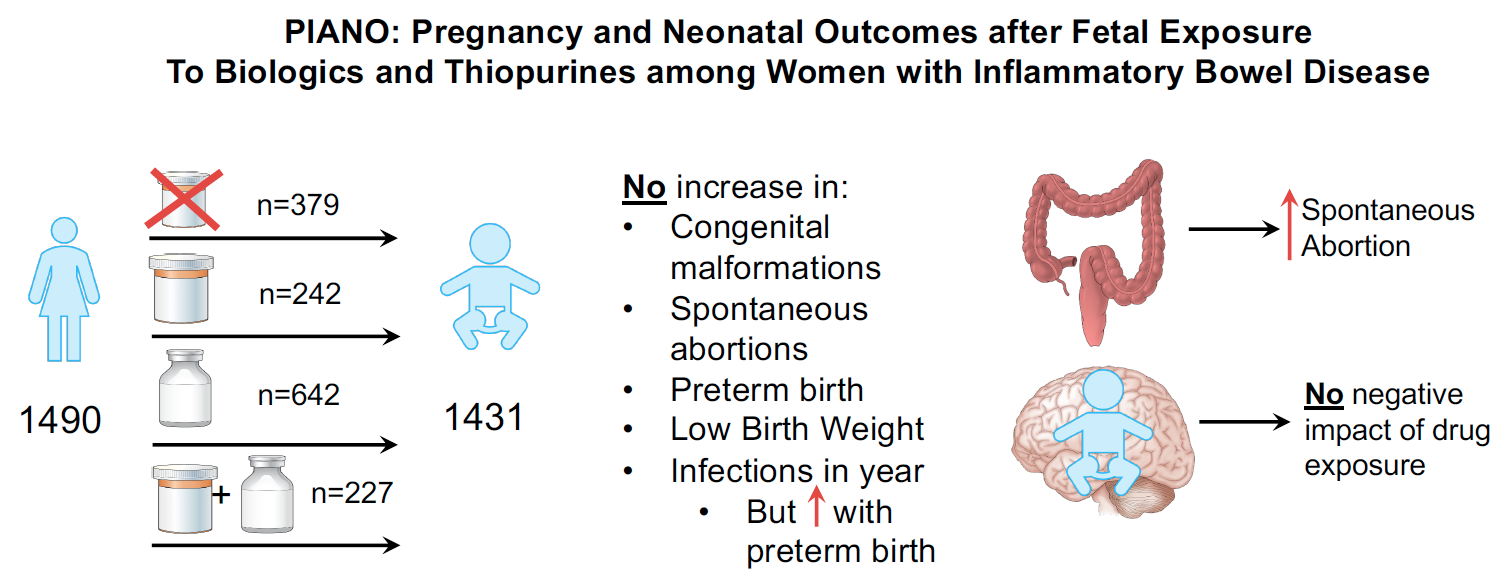
For more information, please visit the PIANO website.
 PIANO Registry (pdf)
SIBERITE: RO7790121 in Patients With Moderately to Severely Active Crohn's Disease
The SIBERITE study is a Phase III clinical trial by Genentech evaluating RO7790121, a potential treatment for moderately to severely active Crohn's Disease (CD). This drug targets TL1A, a protein involved in gut inflammation, to help reduce symptoms and maintain remission. The study is enrolling adults (16-80) who have not responded well to other therapies. By participating, individuals contribute to research that may improve future CD therapies.
For more information, please view the ICF below: